
Walk-In vs. Appointment: How Same-Day Emergency Dental Care Actually Works
Reviewed by Dr. Tarsem Lal, DDS — Urgent Dental Care of Houston, Northwest Houston.
Quick Answer
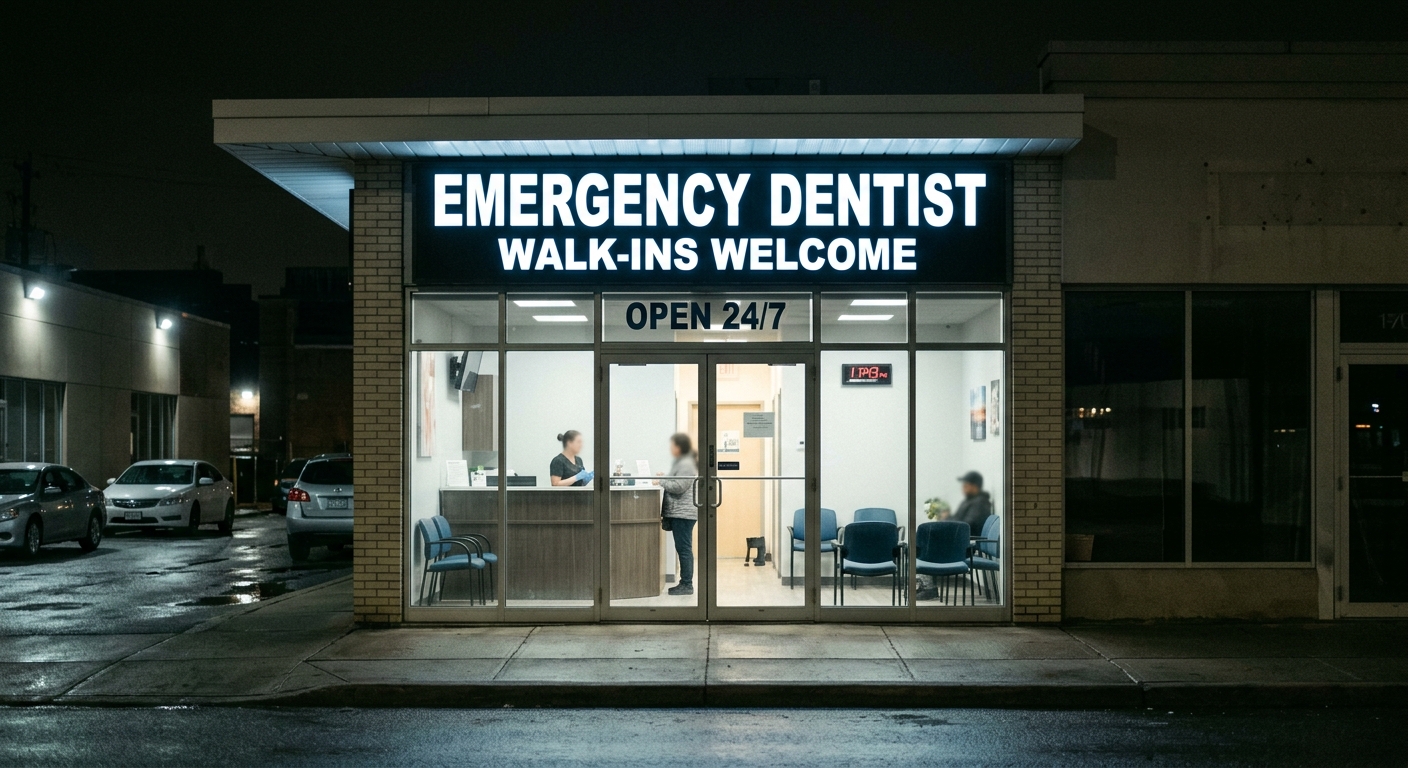
A walk-in emergency dentist in Houston sees you the same day without a prior appointment: you arrive, give a short medical history, receive a focused exam and digital X-ray, and usually begin treatment in that same visit. Calling ahead isn't required — it just lets the team ready a chair. At Urgent Dental Care of Houston, 3264 S Loop W, Houston, TX, walk-ins are welcome Friday–Sunday, 8am–8pm.
Key Takeaways
- Walk-in and same-day appointment are the same clinical visit — only the logistics differ.
- Calling (346) 641-0370 first beats walking in cold, even by fifteen minutes.
- Most emergencies finish in one visit: extraction, root canal, filling, drainage.
- Triage runs by severity, not arrival order.
- Trouble breathing or swallowing means 911, not a dental chair.
Do You Need an Appointment to See an Emergency Dentist in Houston?
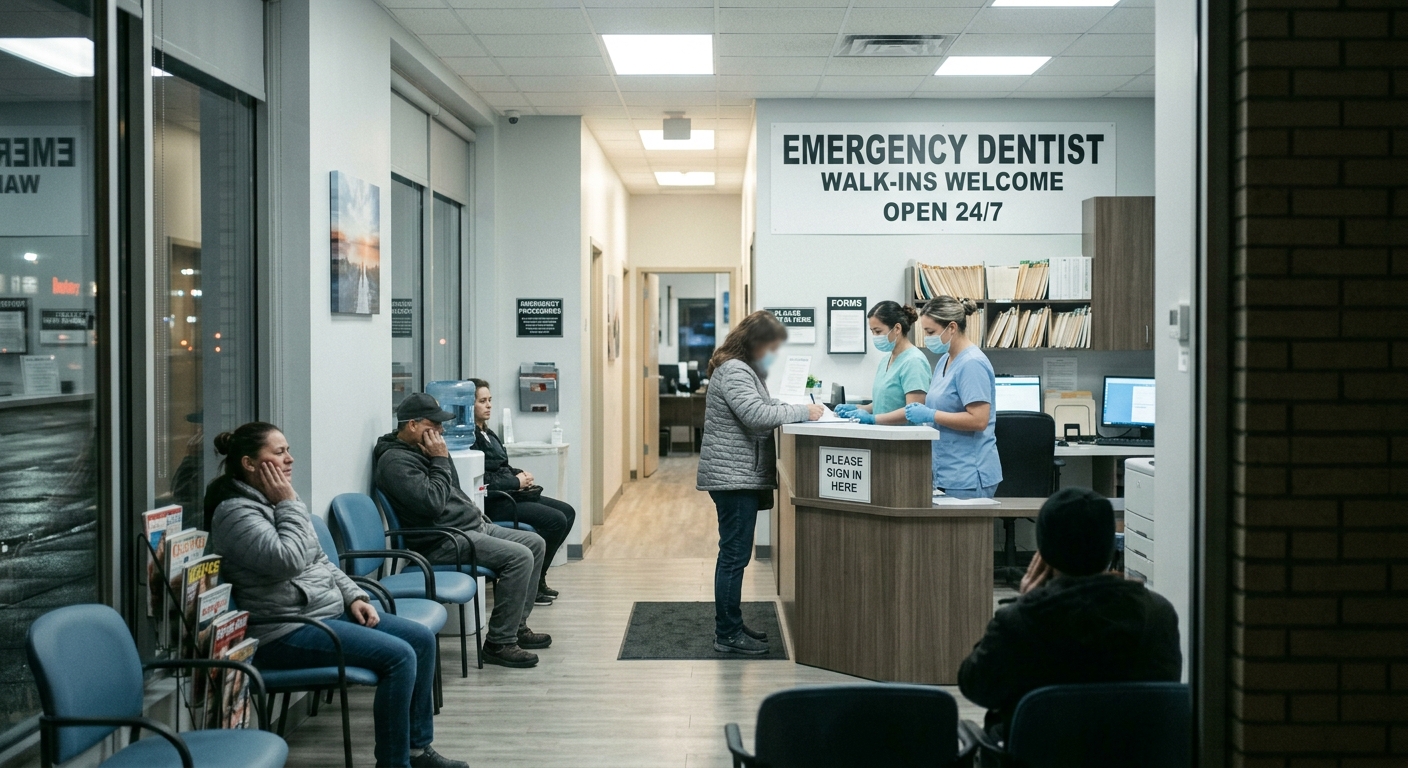
No. A walk-in emergency dentist in Houston accepts patients who arrive without a booking, and no referral or existing record is required. The real difference is wait time, not access to care.
Slots stay open all weekend because emergencies don't schedule themselves. Patients from Jersey Village, Spring Branch, Cypress, Copperfield, Bear Creek, Willowbrook, the Energy Corridor, Memorial, and Katy routinely arrive straight from work.
What Actually Happens During a Walk-In Dental Visit?
Every walk-in follows one sequence: intake, focused exam, digital X-ray, diagnosis with written costs, then treatment. Nothing starts until you've approved the estimate.
Process Timeline — Arrival to Relief
Which Problems Can Be Finished in One Visit?
Most of them. Pain relief, infection control, and tooth removal are typically completed the same day; anything needing a dental lab requires a second visit.
How Are Patients Prioritized When Several Arrive at Once?
By clinical severity, not by who reached the door first. Facial swelling with fever is seated ahead of a chipped incisor, and that ordering is explained openly.
Decision Matrix: Where Should You Go?
Myth vs. Fact
What If You Arrive Near Closing Time?
Arriving after roughly 6:30pm usually means diagnosis, pain control, and a plan, with treatment first thing next morning. Anesthesia and recovery need the hours.
Dr. Tarsem Lal, DDS has run walk-in weekend schedules for years, and the advice never changes: come early. A Friday extraction buys the whole weekend to recover — a pattern Energy Corridor and Katy commuters use deliberately.
Frequently Asked Questions
1. Can I just walk in without calling? Yes, throughout Friday–Sunday, 8am–8pm. Calling (346) 641-0370 first simply shortens your wait.
2. How long is the typical wait? Usually 20–60 minutes unannounced, often under 30 if you call ahead. Weekend mornings are busiest.
3. Do I need to be an existing patient? No. Most emergency patients are seen for the first time, with no prior records or referral.
4. What does the first visit cost? The new-patient emergency exam is $89 and includes digital X-rays. Treatment is quoted separately, in writing, beforehand.
5. What if I have no insurance? Self-pay is common here. In-house financing up to $1,500 covers most urgent treatment.
6. Can a tooth be pulled the same day I walk in? Frequently — if the tooth is accessible, infection is controllable, and your medical history allows it.
7. What should I bring? Photo ID, insurance card if you have one, a written medication list, and a payment method.
8. Will I be numb enough if the tooth is infected? Acutely inflamed tissue can resist local anesthetic, which is managed with supplemental technique and extra time.
9. Can I drive myself home? After local anesthetic, yes. If sedation is planned, arrange a driver in advance.
10. Do you treat children on weekends? Yes. Mention your child's age when you call so the visit can be prepared appropriately.
11. What if my problem started at another dental office? Dry socket and post-extraction bleeding are treated regardless of where the work was done.
12. When should I go to an ER instead? Trouble breathing or swallowing, swelling under the tongue or down the neck, or high fever with confusion. Call 911 first.