
Simple vs. Surgical Tooth Extraction in Houston, TX
Once you've been told a tooth has to come out, the next question is usually how much of your week it's going to cost you. That depends on which of the two extractions you need. The tooth decides it, not the office, and around the warehouses and job sites off Clay Road it's the difference between one day off and most of a week.
Short Answer
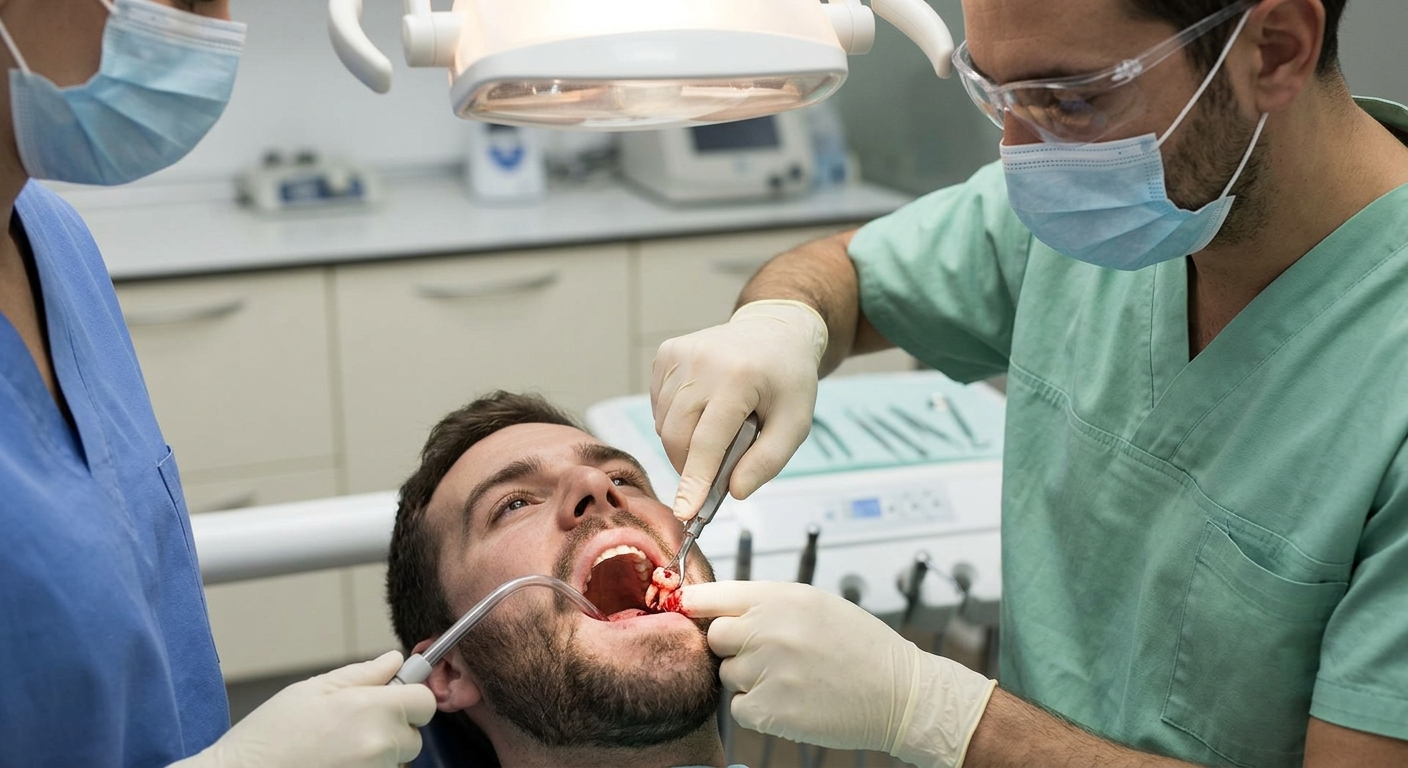
A simple extraction is used when the tooth is fully visible above the gum and can be lifted out whole. A surgical extraction is used when the tooth is impacted, broken at or below the gumline, or has roots that won't release, so the dentist makes a small cut in the gum and may take the tooth out in pieces. Simple extractions usually settle in three to five days, surgical ones in one to two weeks.
Key Takeaways
- The type depends on where the tooth sits and what shape it's in, not on how much pain you're in.
- Surgical extractions usually involve stitches, more swelling, and a longer recovery.
- A simple extraction can turn surgical partway through if the tooth breaks.
- Swelling after a surgical extraction peaks around day two or three, not on the day itself.
- Physical work outdoors is the activity to plan around, especially in a Houston summer.
How the Decision Gets Made
It comes down to access. If there's enough solid tooth above the gum to grip, and the roots are straight enough to release, it's a simple extraction. If the tooth is buried in bone, snapped off flush with the gum, badly decayed, or anchored by roots that curve or hook, the dentist has to open the gum to reach it.
This is why Dr. Tarsem Lal takes an X-ray before quoting anything. Root shape and position don't show up when you look in someone's mouth, and two teeth that look identical from the outside can need completely different approaches.
When a Simple Extraction Turns Surgical
This one catches people off guard. A tooth weakened by decay or a large filling can break during a routine extraction, and once a root fragment is left in the socket the dentist has to open the gum to retrieve it. That's a normal part of the process, not a mistake, but it changes the recovery you planned for and often the fee. Worth asking about beforehand.
What Recovery Actually Costs You
After a simple extraction, most people are back to a desk the next day. Surgical is different: swelling builds for a couple of days before it improves, so day three is often worse than day one. If you commute up 290 or work a physical job, plan around that instead of the appointment date.
Heat matters here more than people expect. Heavy lifting, outdoor work, and a Houston August all raise your blood pressure and your risk of dislodging the clot, which is what causes dry socket. Two to three days off strenuous work after a surgical extraction is a reasonable ask, and it's easier to arrange before the procedure than after.
Both fall under the same emergency dentistry umbrella, and both are done under numbing that works. The difference is the healing, not the appointment.
FAQ
Does a surgical extraction hurt more?
Not during the procedure, since you're numb either way and sedation is available. The difference shows up afterward, with more soreness and swelling for the first two to three days.
Why does a surgical extraction cost more?
It takes longer, requires an incision and often stitches, and sometimes involves removing a small amount of bone. Ask for the code and the estimate before treatment so there's no surprise if the plan changes mid-procedure.
Are wisdom teeth always surgical?
No. Wisdom teeth vary. An upper one that has fully erupted often comes out simply, while a lower one still partly under the gum or angled into its neighbor almost always needs the surgical approach.
If you're not sure which one you're facing, ask which type is planned and what the recovery instructions look like before you book the day off. The answer changes how you plan the week around getting a tooth removed.