
How the $89 Emergency Dental Exam Works and What It Includes
Reviewed by Dr. Tarsem Lal, DDS — Urgent Dental Care, 3264 S Loop W, Houston, TX.
Quick Answer
The $89 emergency dental exam in Houston covers a focused examination of the problem tooth plus digital X-rays, and ends with a written diagnosis and estimate. Treatment is quoted separately — you can pay the $89, take the plan home, and decide later. Nothing is started until you've seen the price and said yes.
Key Takeaways
- $89 buys a diagnosis, not a commitment. Exam plus digital X-rays, new patients.
- You may stop after the exam. Leaving with a written plan is a normal outcome.
- Treatment is quoted before it begins, itemized and in writing.
- No insurance is required. Self-pay is the norm here, not the exception.
- In-house financing up to $1,500 covers most urgent treatment.
- Call (346) 641-0370 to confirm the offer applies to your visit.
What Is Included in the $89 Emergency Dental Exam?
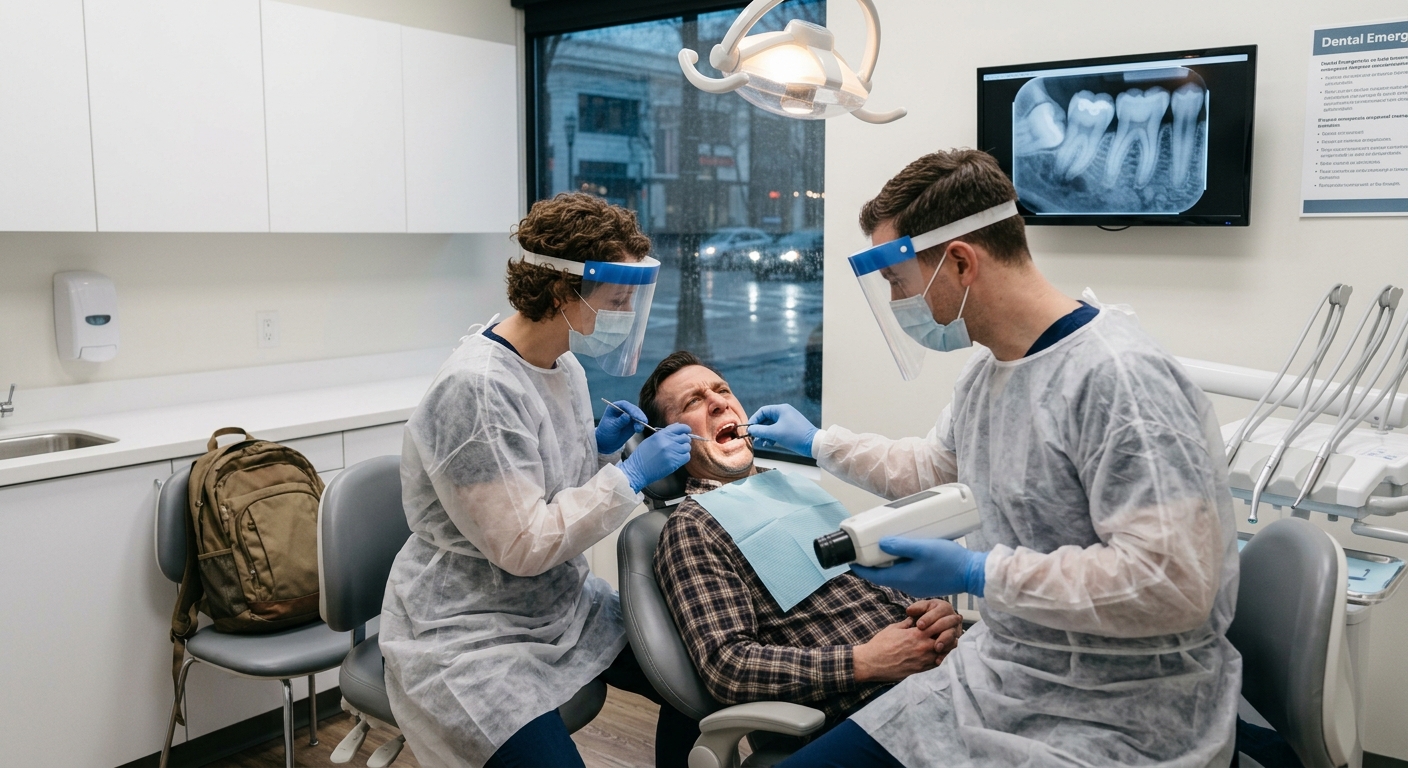
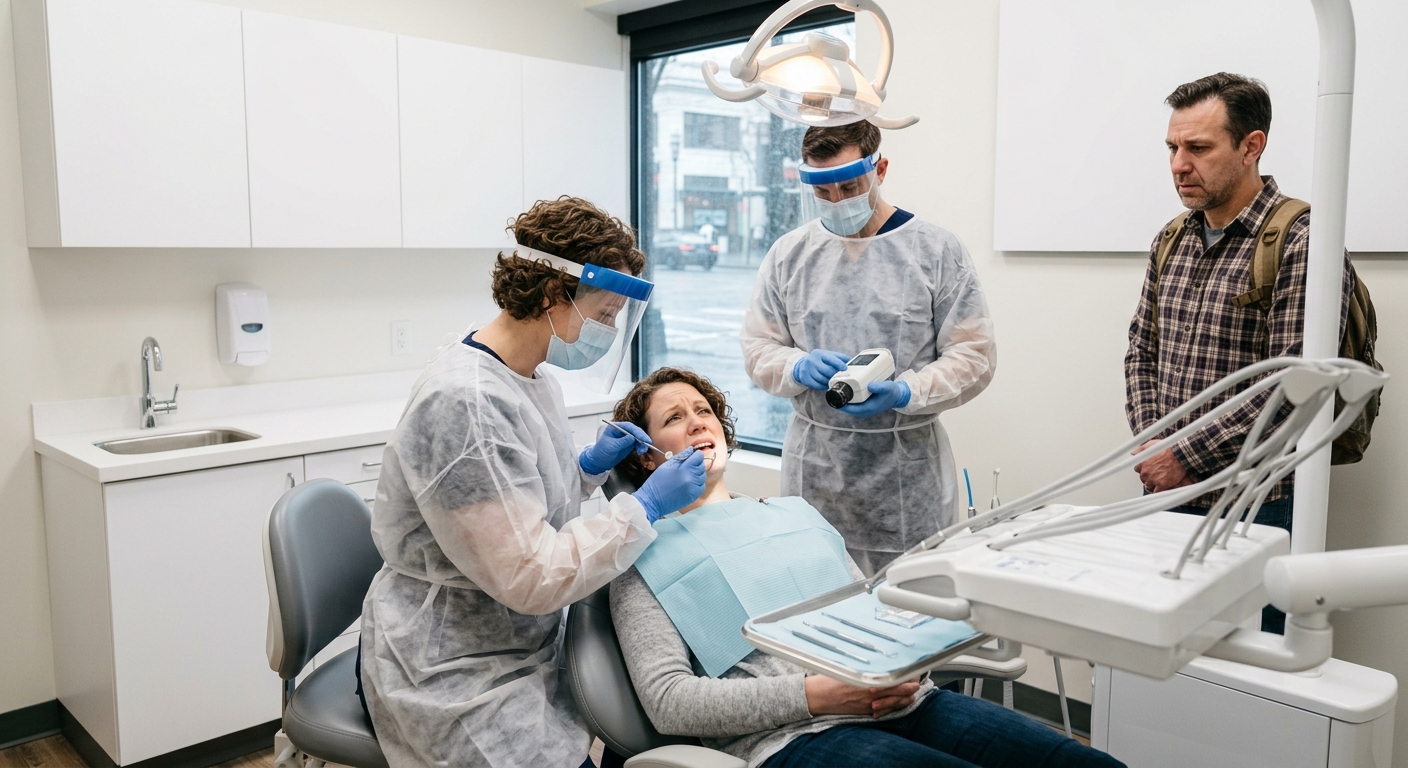
A focused clinical examination of the tooth or area causing trouble, plus the digital X-rays needed to see what's happening below the gumline. It ends with Dr. Tarsem Lal, DDS explaining the diagnosis and handing you a written estimate.
It is deliberately focused. This is not a full-mouth checkup with cleaning and charting — it's a fast, targeted answer to the question that brought you in.
What Does an Emergency Dental Exam Cost in Houston Without Insurance?
The exam itself is $89 for new patients. What varies enormously is what comes after — which is exactly why the diagnosis comes first and the number comes in writing.
Patients across Jersey Village, Spring Branch, Cypress, Copperfield, Bear Creek, Willowbrook, the Energy Corridor, Memorial, and Katy often arrive having already paid an ER or urgent care bill for the same tooth. The medication helped; the tooth was never touched.
Does the $89 Go Toward My Treatment?
The exam fee covers the exam and imaging — the diagnostic work that has to happen before anyone can quote you accurately. Ask at check-in how it applies to your specific plan, because that depends on what treatment you choose.
The more useful point is what the fee buys you: leverage. A written, itemized estimate is something you can compare, question, or take elsewhere.
What Happens During the Visit?
Intake, focused exam, X-ray, then diagnosis and a written estimate — roughly forty minutes before any decision is asked of you. Treatment only follows if you say yes.
Should You Start With the $89 Exam?
For most people in pain with no regular dentist, yes — it's the cheapest way to find out what's actually wrong. The matrix below covers the common situations.
Myth vs. Fact
Frequently Asked Questions
1. Is the $89 exam available to everyone? It's a new-patient offer. Call (346) 641-0370 to confirm it applies before you arrive.
2. Does it include X-rays? Yes — digital X-rays of the problem area are part of the $89, not an add-on.
3. Can I really leave without treatment? Yes. Many patients take the written plan, think it over, and return. That's an expected outcome.
4. Will I get a diagnosis the same day? In nearly all cases, yes. The X-ray is read during your visit and explained before you leave.
5. Does it include a cleaning? No. This is an emergency exam focused on one problem, not a routine hygiene visit.
6. What if I need an extraction today? It can often be done in the same visit once you've approved the estimate.
7. What if I have insurance? Bring your card and benefits are checked while you wait. The self-pay exam may or may not be the better route.
8. Are prescriptions included? The prescription is written at no extra charge; the medication is paid for at your pharmacy.
9. Can I get a second opinion with it? Yes, and patients do. Bring the other estimate so the two can be compared line by line.
10. What if the estimate is more than I can pay? Ask about financing up to $1,500, or about phasing treatment so the urgent part is handled first.
11. Do children qualify? Yes, for emergency visits. Mention your child's age when you call.
12. Is the estimate binding? It reflects the findings on the day. If something changes once treatment begins, you're told before work continues.